What makes Maarten Van Severen, for me, different from everyone who came after him, in Ghent or elsewhere? I'll begin with a slight exaggeration: in my career as an interior designer, I have never walked into a client’s home with a piece of Van Severen furniture and then walked out with it again. It simply looks great everywhere: in a shack, in a suburban villa, or even in a castle, precisely because his designs are so essential.  

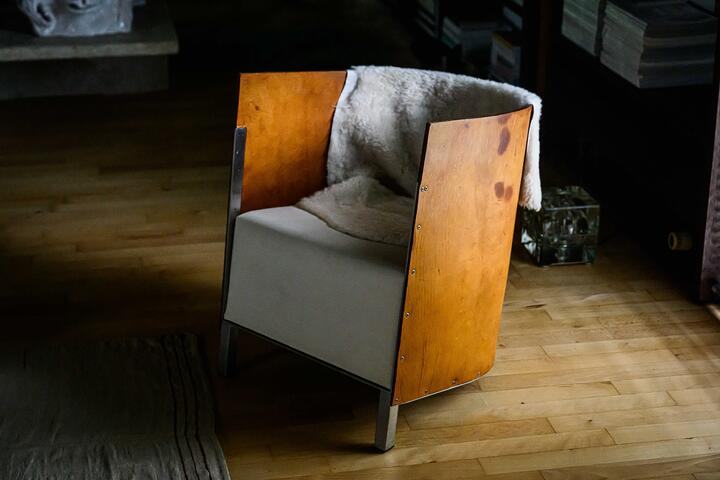
Maarten Van Severen F88 armchair from 1988.

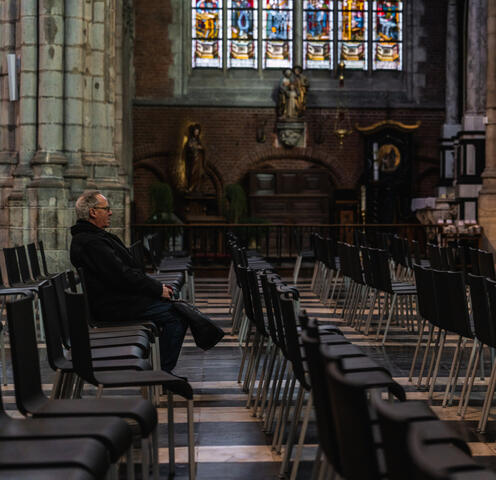
Take St Bavo’s Cathedral, for example. There are hundreds of examples of his most famous chair there, the .03 for Vitra from 1998, in dark grey. That Gothic church has stood there since the Middle Ages and breathes history. It's home to the Ghent Altarpiece, also called the Adoration of the Mystic Lamb, one of the most famous paintings in the world. Well, Van Severen’s chair takes nothing away from any of that. It does not detract from the architecture or the art, even though the design dates from centuries later. And so, for once, it's possible to have a beautiful chair in a church. 

Maarten Van Severen his .03 chair for Vitra in St Bavo's Cathedral in Ghent.

Proportion is everything

I briefly knew Maarten Van Severen personally, when I was eighteen. That was through a good friend, the chef Stefan Boxy. Stefan wanted a pavilion next to his house in Deurle (near Ghent), and he wanted Van Severen to design it. Maarten was not an architect, but I think a good furniture designer automatically makes a good architect. Someone who finds the right proportion and functionality in a piece of furniture also has an overall vision of what a space should do. That explains why he collaborated several times with the Dutch architect Rem Koolhaas. 

The pavilion became a construction in lacquered steel, slightly elevated and detached from the ground, very transparent, with large glass sections. Maarten was already ill when we went to look at the structural works. Only the steel framework was in place. I remember that, towards the end, Stefan asked him whether he regretted that he would never see his work completed. Van Severen replied: “But it is finished. Everything is in place. The proportions are there.” That was what mattered to him most, the rest was secondary. 

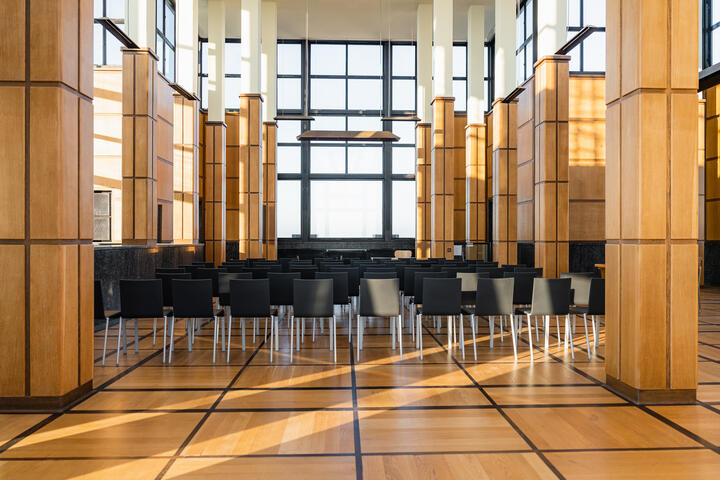
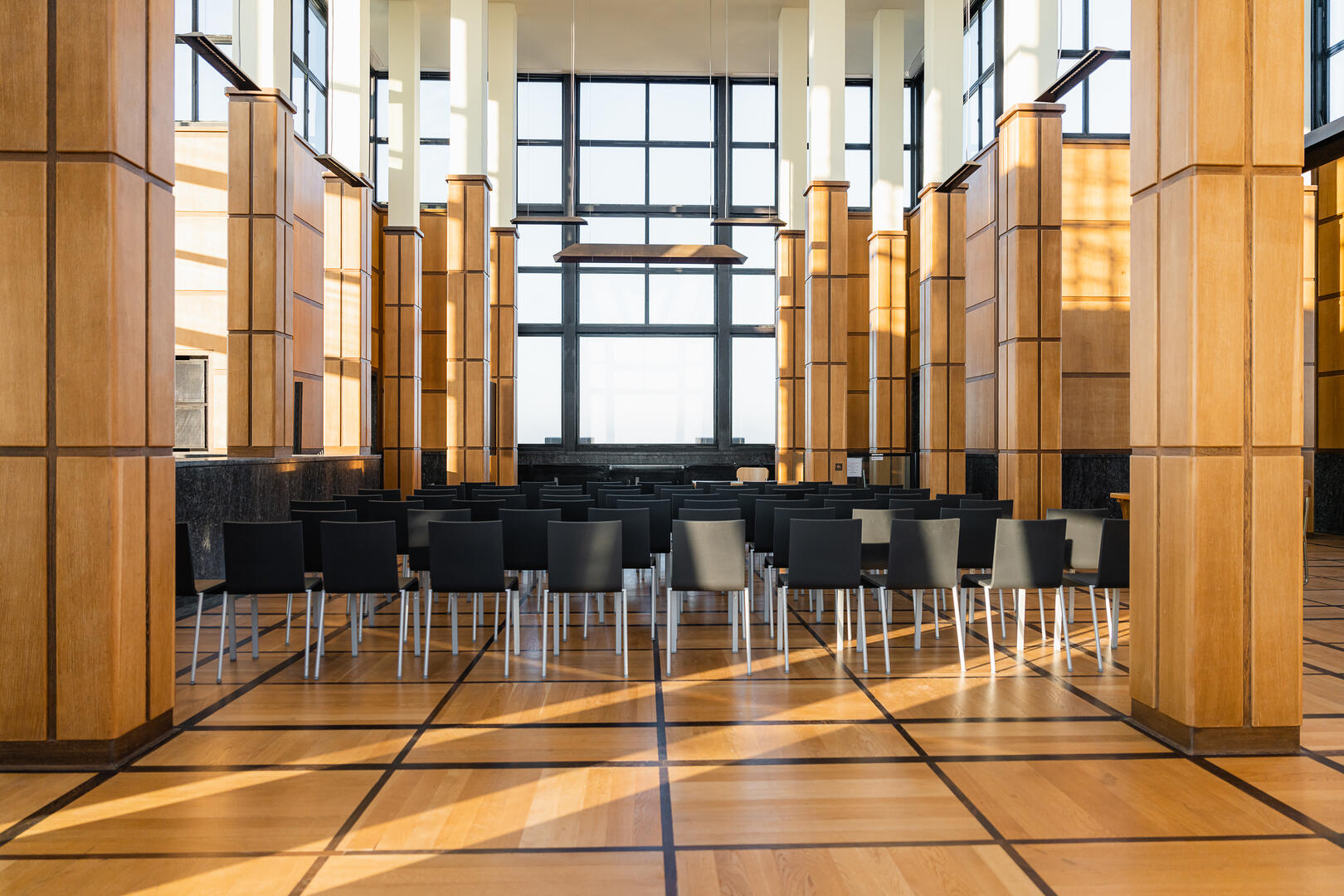
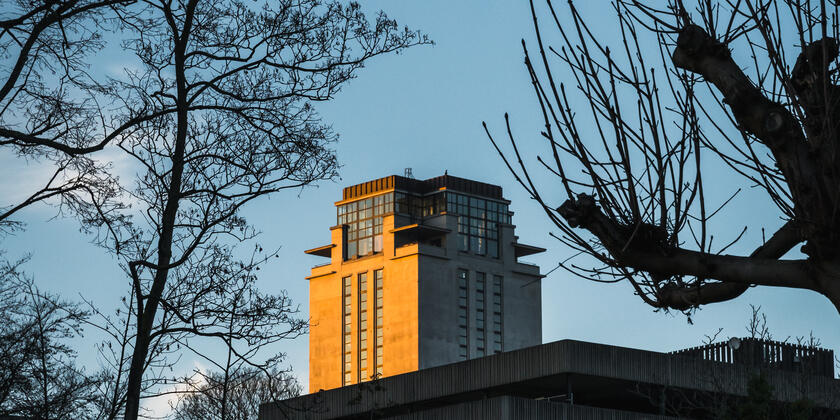
Maarten Van Severen's famous .03 chair can also be found in the Booktower.
In my career as an interior designer, I have never walked into a client’s home with a piece of Van Severen furniture and then walked out with it again
Frederic Hooft

Minimalism is complicated

Shortly afterwards, I bought my first piece of Van Severen furniture: the steel table that still stands on my terrace. It is actually outside out of necessity, because it cannot be dismantled and I cannot get it through any window or door into the house. Especially in his early designs, he was 100% uncompromising in this regard: no weld seam or joint was allowed to be visible, so the table had to remain in one piece. However simple it may look, it was incredibly complex to produce such a long, slender surface without the steel bending. 

The more minimalist, the more complicated it becomes. The same applies to his seven-compartment bookcase: not a single screw or connection is visible. That requires adhesive from the automotive industry. The aluminium looks wafer-thin, but the cabinet is extremely heavy, and it is not easy to mount. Once it is in place, however, it is perfect. It resembles a work by the minimalist artist Donald Judd, and Van Severen is often compared to him. Yet there is one crucial difference that I always insist upon: Van Severen produced utilitarian objects. Without books, the cabinet is not complete.  

Steel does not bend, nor does Van Severen

The fact that furniture must interact with people is embedded in his design. Take the aluminium table T88A, for example. Each one first had to be sanded for 45 hours. Not by machine, but by hand. Only one person was allowed to work on each table, because otherwise different “clouds” from the sanding pattern would become visible on the surface. As a finish, the table only received a layer of liquid wax, which is not a varnish. Scratches are therefore inevitable. For Van Severen, signs of use were part of the work. Some people therefore prefer to buy a second-hand piece, because it has already lived. It is not a blank slate. 

The oeuvre of Maarten Van Severen is limited, as he died at just 48. In the beginning, he worked with only a few materials: aluminium, steel, wood, and leather. He made the prototypes in his own workshop on Galgenberg in Ghent, together with anyone who could help with sanding or welding. He had no permanent staff and sold virtually nothing. I believe the things he designed were always made primarily for himself. I even think that he created his famous Blue Bench essentially so that he could sleep on it in his workshop. 

Van Severen was radical and not an easy person. He had no talent for networking at all, so it took a long time before he was picked up by major brands such as Edra, Kartell, and Vitra. That collaboration saved him financially from ruin, but it must also have been difficult for him, because industrial production always requires some form of compromise. The predecessors of the Vitra .03 chair, for example, were not made of flexible polyurethane, but of aluminium and plywood. Try sitting on one of those for a few hours…  

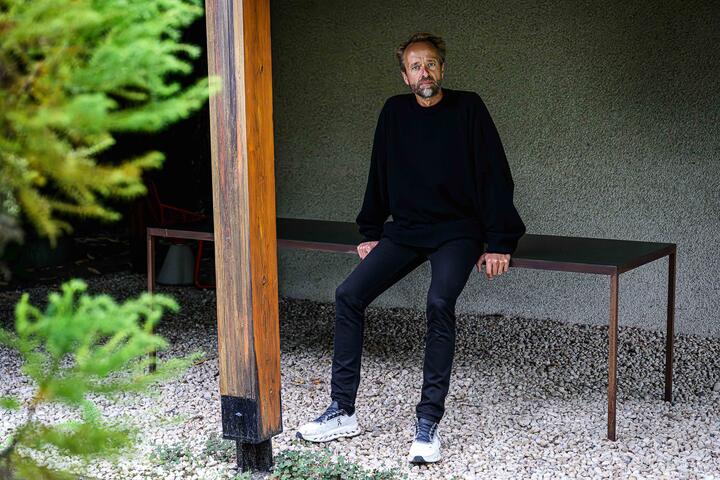
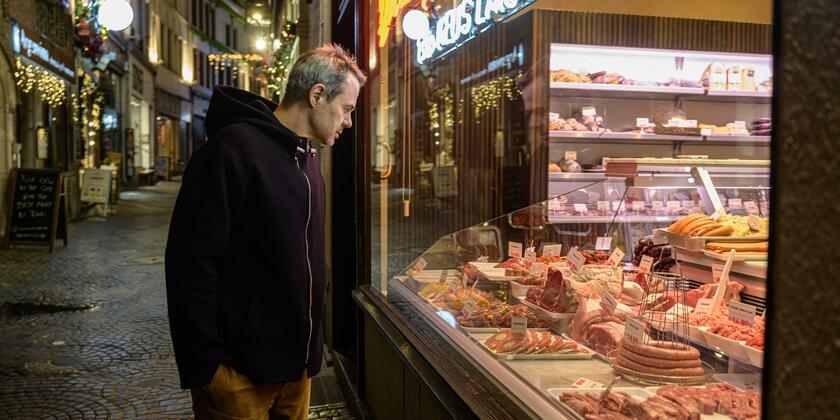
Frederic his first piece of Van Severen furniture: a metal table on his terrace.

Time for chauvinism at the Design Museum

His inclination towards purity and pure proportion may well have come from home. His father, Dan Van Severen, was a minimalist painter who used only basic forms: a trapezium, a circle, a cross, sometimes in no more than two shades of white. I don't know whether they had a good relationship, but the essence certainly lives on in Maarten’s designs.  His brother Fabiaan also became a designer, as did Maarten’s two sons. Hannes Van Severen now runs the studio Muller Van Severen together with Fien Muller, and David runs the architectural practice Office KGDVS. so the line continues. 

Ghent's citizens should be far prouder of all these individuals. Modesty is, in any case, a problem for us Belgians. Outside the country, Belgian designers are greatly admired, but in Belgium they are often noble unknowns. Take Willy Van Der Meeren, Lucien Engels, Christophe Gevers, Jules Wabbes, Huib Hoste, and Emiel Veranneman, for example. None of these designers have ever received much recognition in Belgium. If some of them were given a place in the renewed Design Museum Ghent, it would be more than richly deserved. As for Maarten Van Severen being given a place there, I have no doubts at all.  


Frederic Hooft

Frederic Hooft (b. 1979) is an interior designer. After one year at art school, he decided to quit, because he had no desire to listen to someone else telling him what was beautiful and what was ugly. He turned his own intuition into his profession. With his interior studio, he is a passionate seller and defender of post-war Belgian designers.