Waterzooi

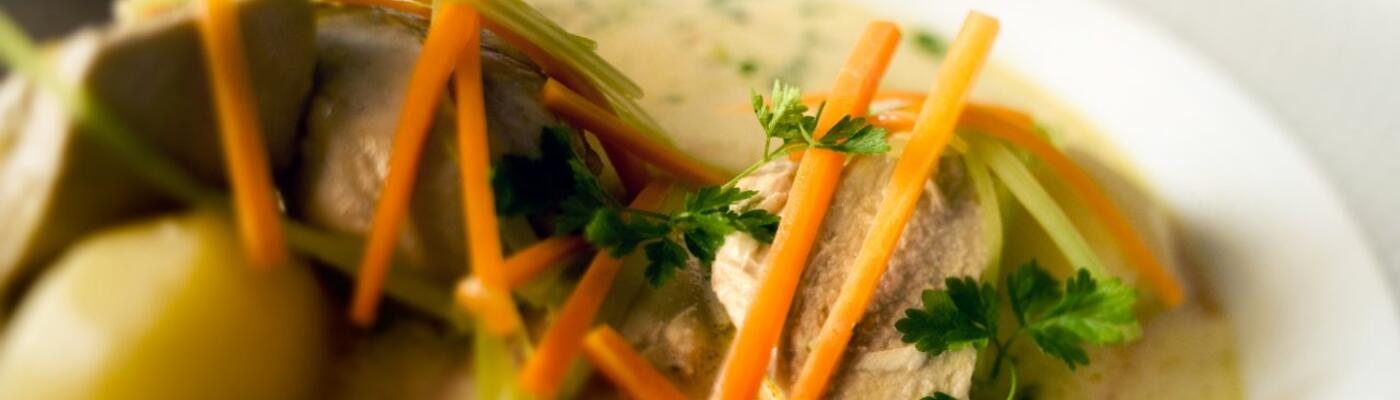
“A creamy broth with vegetables, originally made with fish, later also with chicken."

It doesn’t surprise me that AI starts with waterzooi — it’s probably everywhere online as the Ghent speciality. And yes, the bit about fish and chicken is correct. Waterzooi dates back to the Middle Ages, when people didn’t have kitchens, just a single pot of broth over a fire, into which all sorts of things could end up. Basically, whatever was cheap or freely available. In Ghent, that usually meant freshwater fish caught in the city’s waterways. I’m not entirely sure which ones. Pike, catfish, maybe carp?

Industrialisation in the 19th century heavily polluted those waterways, and the fish disappeared. For some, fresh sea fish from the Old Fish Market became the alternative, but anyone who couldn’t afford that probably had to make do with a chicken from a backyard or the countryside. Versions of waterzooi were eaten everywhere, of course. But at some point, someone must have labelled it “typically Ghent” in a popular cookbook, and it stuck.

Reality check: a Ghent classic by pure coincidence.

Stoverij

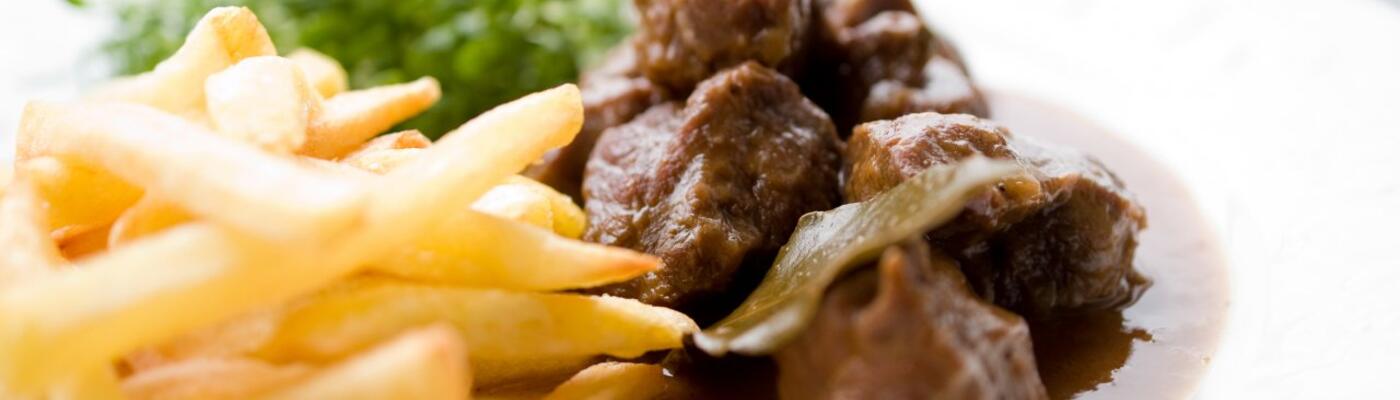
“Meat stewed in beer, often with a local twist such as mustard or beer from Ghent breweries."

What does “local” actually mean? In Canada, it probably covers a radius of a thousand kilometres, but here, in our tiny country, we already start arguing if more than five kilometres can still be considered local. Once again, stoverij reflects the world in which it came into being. Our beer culture is strong, so that’s no accident. In the past, beef was the obvious choice. Today, pork cheeks are popular. From one cow, you can make stew for two hundred people. For a single portion with pork cheeks, two animals have to be slaughtered. That says a lot about how disconnected we’ve become from farming, and how abundance has crept up on us without us noticing. Pork-cheek stew feels very 'now', but I’ll stick with beef, thanks.

Reality check: not specific to Ghent — just Belgian

Tierenteyn Mustard

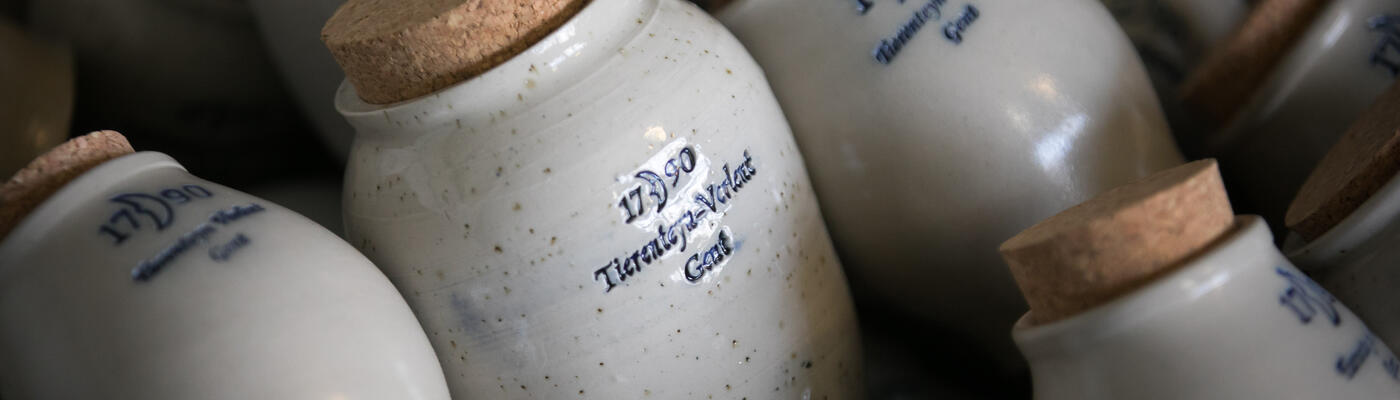
"World-famous Ghent mustard, strong and sharp.”

Ghent isn’t a mustard city by accident. Mustard seed came from far away, and we’ve had an international port since the Middle Ages. I don’t know the full history, but today there are two kinds of Tierenteyn. One you can find in every supermarket. The other only in the artisan shop on the Groentenmarkt. That’s the one I use. It has a flavour all of its own — punchy but approachable, made with the bare minimum of ingredients.

Reality check: made in the cellar beneath the shop — it doesn’t get more local than that!

Cuberdons

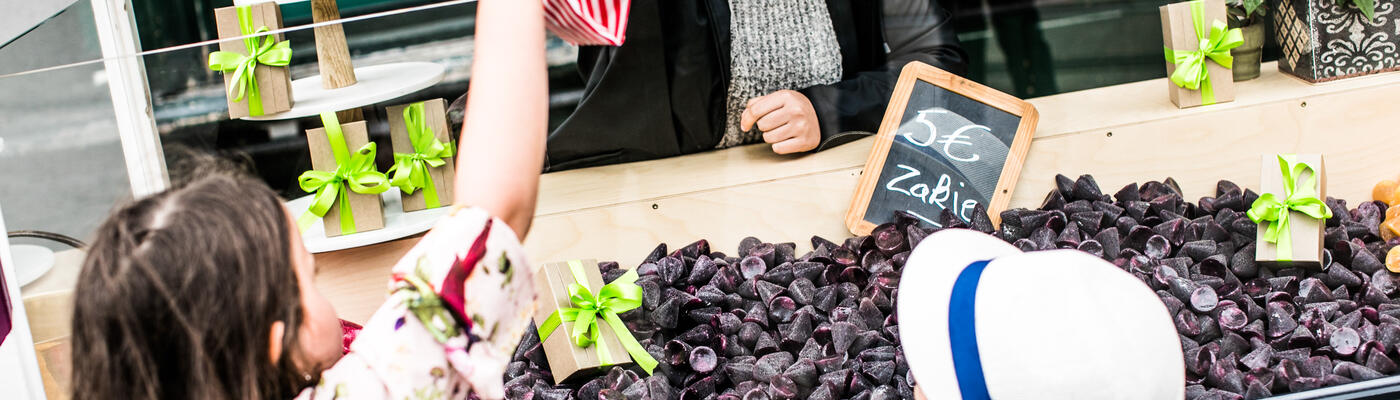
“Purple-red sweets with a liquid centre, known as ‘neuzekes' (little noses), from the stalls around Korenmarkt.”

Everyone knows them, but I’m not a fan… That said, I recently went to Temmerman, the sweet shop on Kraanlei, with my daughter, where we bought those old-fashioned Ghent poepkes. That’s proper confectionery. If you buy poepkes nowadays, the bag is empty in five minutes, but these were rock hard. After fifteen minutes, they were still stuck to my teeth. It takes me straight back to the days when, for one Belgian franc, your sweet had to last as long as possible. Wonderful — and Temmerman still makes them!

Reality check: neuzekes are fairly typical to Ghent, and definitely for tourists.

Cuberdons

These raspberry flavoured sweets are synonymous with Ghent
Inspiration

Mastellen

“Round bread rolls, sometimes with cinnamon, especially popular around Mid-Lent.” 

How specific to Ghent mastellen really are, I wouldn’t dare to say. I’d argue they’re more popular during the Patershol Festivities in August. That’s when they’re pressed under a hot plate, filled with brown sugar. Very Ghent indeed! What most locals don’t realise is that this brown sugar is typically Belgian. Speculoos would never taste the same without it. As a tourist, you could simply buy a bag of sugar in the supermarket as an authentic souvenir. Cheaper than pralines!

Reality check: 100% Ghent when pressed with brown sugar


Hoofdvlees

“Pork slowly cooked and set in jelly, sold in slices.”

Hoofdvlees — uufflakke in Ghent dialect — isn’t really specific to Ghent at all. Every city has its own version. In the Westhoek it’s called potjesvlees, made with pork, veal, rabbit and chicken. In Leuven, there’s even a rabbit-only version. Honestly? It’s not eaten that much here anymore, except in the small hours during the Ghent Festivities, and then often with Irish coffee, of all things! I’m sure the crowd on Vlasmarkt in the morning doesn’t mind, but I don’t see the food pairing. I’ll take mine with a pint.

Reality check: only during the Ghent Festivities — with Tierenteyn mustard


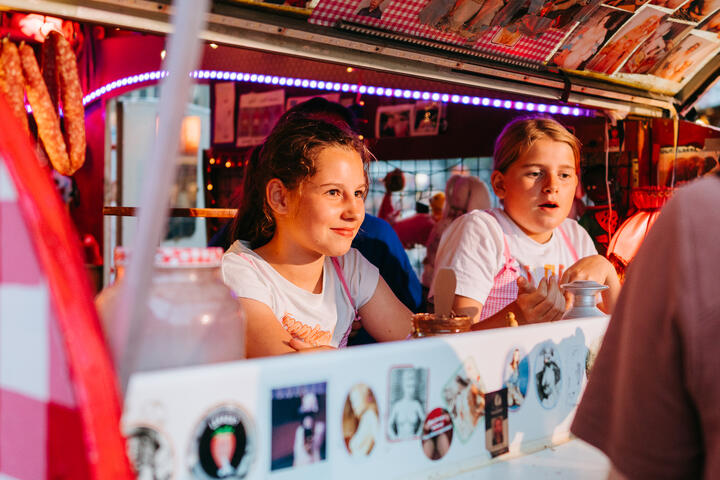
During the Ghent Festivities, 'het Botramkot' sells 'botrams' (sandwiches) for ten nights, including 'uufflakke' (head meat)

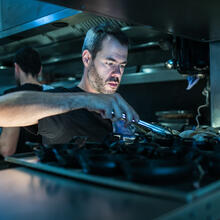
Olly Ceulenaere

Olly Ceulenaere was at the bottom of his hotel-school cooking class. But the pull of the kitchen was strong, and he learned the craft in top restaurants – the hard way. The more experience he gained, the more he understood: it’s not about what you can do with a truffle. It’s about the experience you offer your guests. Today, he does that with effortless ease at Publiek in Ghent. He never asked for a Michelin star, but he got one anyway.