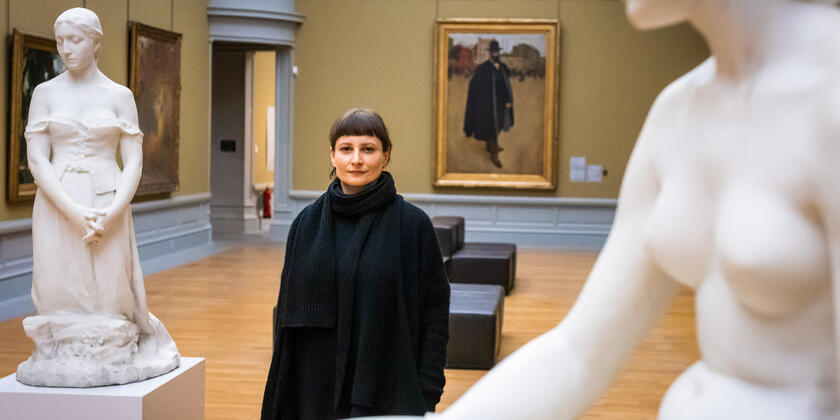
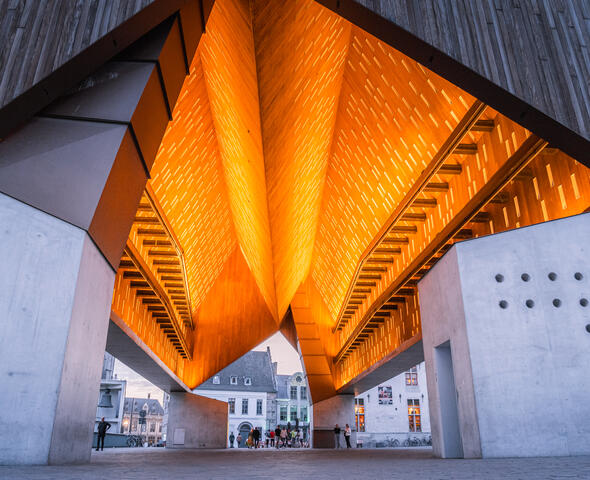
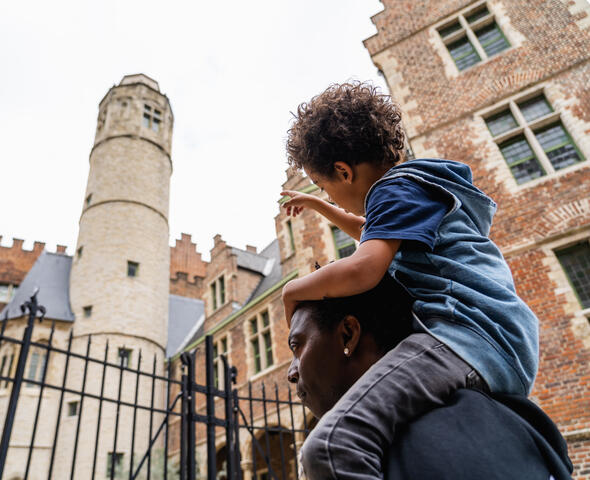
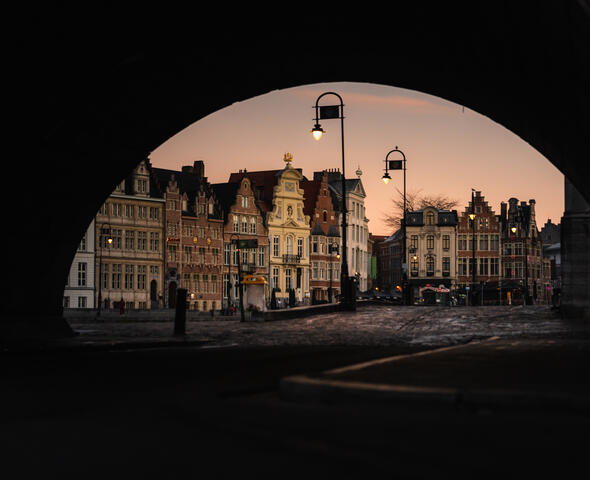
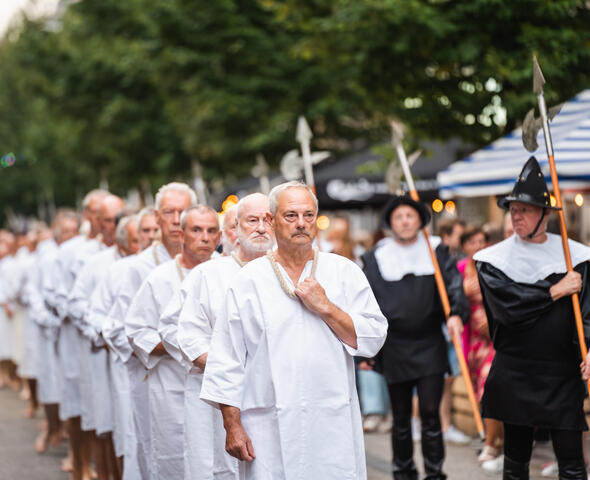
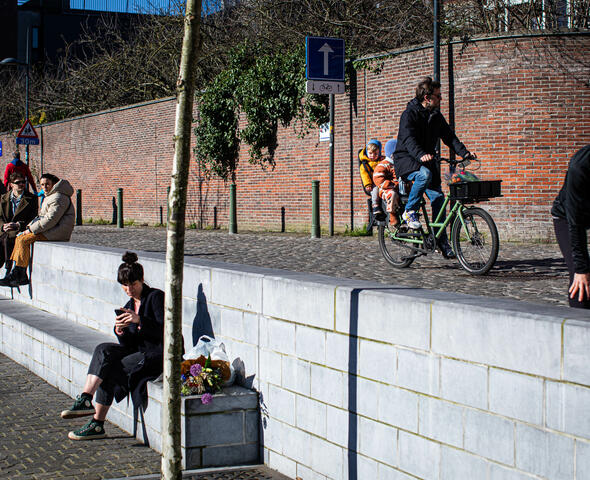
We cannot answer the question ‘what is art?’. But if you were to ask ‘where is art?’, then our answer is ‘in Ghent!’. In Ghent, art can be found outdoors and indoors, whether it’s official or unofficial, large or small, loud or quiet. In Ghent’s museums, you will be immersed in art on a variety of topics, from Flemish Masters and science to psychiatry or industry. Art in Ghent is aimed at the whole family, with activities that also excite children. And events such as the Light Festival, the street art festival ‘Sorry Not Sorry’ or the Museum Night add on to the artsy vibes in the city.
  • The pimples of Joos Vijd

    Sometime in the 1420s, Joos Vijd and Elisabeth Borluut commissioned an altarpiece for their private chapel. This would eventually become the greatest painting of the age — the result of years of intensive labour by one of the most acclaimed artists of the Low Countries. The couple must have paid a fortune for this work of art. So why did Van Eyck not depict them in a more flattering manner?
  • The conservation in three details

    The Ghent Altarpiece has been reborn in the past decade. The conservation campaign gradually revealed that the original had been heavily overpainted – to the extent that the hand of Van Eyck was sometimes hard to find. Perhaps the best way to illustrate our work is by giving a few examples.
  • The naked truth about Adam and Eve

    And then there you are, face to face with the naked Adam and Eve. They’re painted in exquisite detail, right down to Adam’s curly chest hair. Few characters on the Ghent Altarpiece capture the imagination quite like they do. But how did people in Van Eyck’s time view them? And in the following decades?
  • Revealing Van Eyck, six centuries later

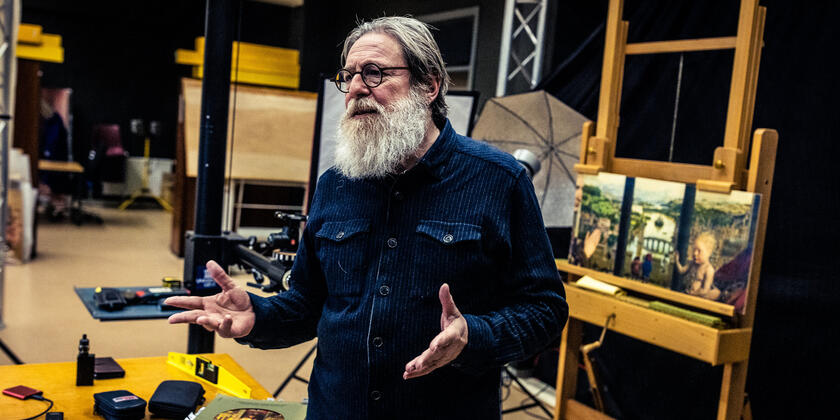
    Conservation is a wonderful profession because it combines so many things: art history and science, tangibility and chemistry. Thanks to today's technology, we are revealing The Ghent Altarpiece as it originally appeared in the 15th century – and that's a magical experience when you experience it right up close.
  • Hubert and Jan: Ghent versus Bruges?

    A whole library has been written about the role of Jan and Hubert Van Eyck. We do not know which one of the brothers painted what part of the Ghent Altarpiece. No other works of art by Hubert have been preserved, which makes him more mysterious. But that doesn’t mean he didn’t exist. This persistent myth was invented by a Nazi sympathiser from Bruges…
  • The new old lamb

    Large swathes of the Ghent Altarpiece had been painted over. That took place several times in the centuries after Van Eyck. Even the lamb got a facelift. It now looks us in straight in the eye once again, like it was originally intended. But why did subsequent generations decide to make alterations to this masterpiece?